Board and Batten Siding: Style Guide, Materials and Costs to Expect
The vertical farmhouse look explained — which materials do it best, where it works on a home, and what drives the cost of the installation.
Read the guide →
Many older Cincinnati homes wear asbestos-cement siding shingles — hard, brittle, wood-grain-textured tiles installed from the 1920s through the 1970s. They were prized for fire resistance and durability, and plenty are still serviceable. The questions come when they crack, when you want a new look, or when a sale or renovation forces the issue. This guide explains how to recognize the material, why condition matters more than presence, and the safe, legal options — from leaving and encapsulating to professional removal and replacement.
The shingles are typically thin, rigid and brittle, often about 12 by 24 inches with a wood-grain texture and straight or wavy bottom edges, fastened with visible nails. They feel stone-like and ring rather than flex when tapped. Not every cement-looking shingle contains asbestos — fiber-cement products replaced it — but only laboratory testing of a sample confirms composition. Treat suspect material as asbestos until testing says otherwise.
Asbestos is hazardous when its fibers become airborne and are inhaled. Siding that is intact, undisturbed and in good condition releases essentially no fibers and can often remain in service. Many owners paint it with a quality exterior coating to encapsulate the surface. The danger arises with breaking, cutting, sanding or demolition — activities that should never be a DIY weekend project on suspect material.
Encapsulation (cleaning and coating) preserves the siding at the lowest cost. Siding over it with new material is done in some cases, adding a layer without disturbing the tiles, subject to local rules. Full removal gives a clean start for insulation and new wrap but must follow regulations for handling and disposal, and it is the most expensive route. Each path has permit and disclosure implications, especially at resale.
Proper removal uses trained crews, wet methods to suppress dust, careful whole-shingle handling to avoid breakage, sealed packaging and approved disposal — never a dumpster and a sledgehammer. Costs reflect that care. When you call Cincinnati Siding Pros, tell us you suspect asbestos siding; we will connect you with a provider who handles inspection, testing guidance and compliant removal or encapsulation options.
Cincinnati's climate shapes every siding decision on this page. Humid Ohio River valley summers encourage mildew on shaded walls, spring brings the storm season that tests fasteners and flashing, and winter freeze-thaw cycles exploit any gap that admitted water in the fall. Local providers see the results of all three every week, which is why Cincinnati-specific advice matters more than generic national guidance: details that are optional in a dry climate — kick-out flashing, sealed penetrations, correct clearances at grade — are the difference between a wall that lasts and a wall that quietly rots here.
For the core services behind this guide, start with our siding services in Cincinnati overview, compare siding replacement with siding repair, or go straight to siding contractor in Cincinnati, OH on the homepage.
Almost every siding question eventually becomes this one. As a working rule, localized problems — a damaged section, one failing elevation, a single material issue — repair well and economically. Widespread problems — damage or rot on most elevations, recurring leaks at multiple details, materials at the end of their service life — usually make replacement the better spend, because money poured into patching a failing system buys little time. The honest way to decide is with a documented inspection that maps the damage elevation by elevation, prices both paths, and lets the evidence make the argument. Beware any recommendation, in either direction, that arrives before someone has actually looked behind a panel.

The vertical farmhouse look explained — which materials do it best, where it works on a home, and what drives the cost of the installation.
Read the guide →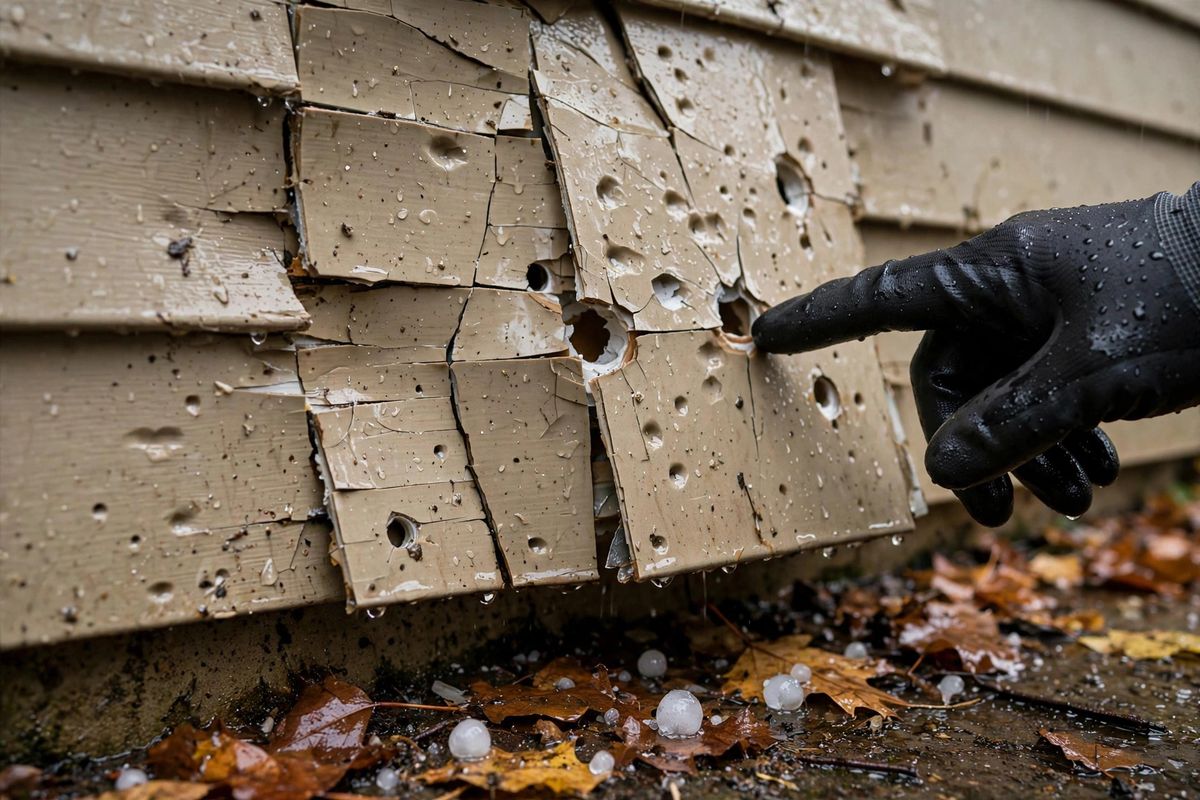
How hail cracks vinyl, dents aluminum and chips fiber cement, how to document damage safely, and the steps to take before you call anyone.
Read the guide →
Curb appeal, buyer psychology, appraisal reality and energy effects — an honest, hype-free look at what new siding does for resale value.
Read the guide → Cincinnati Siding Pros
Call Cincinnati Siding Pros now and we'll connect you with an independent local siding provider in Cincinnati, OH — no pressure, no obligation. Lines are open 24/7.
 Scan to call now