Siding and Windows Together: Why Coordinating Both Projects Pays Off
Flashing order, trim details and energy gains — why replacing windows during a siding project produces a better, longer-lasting result.
Read the guide →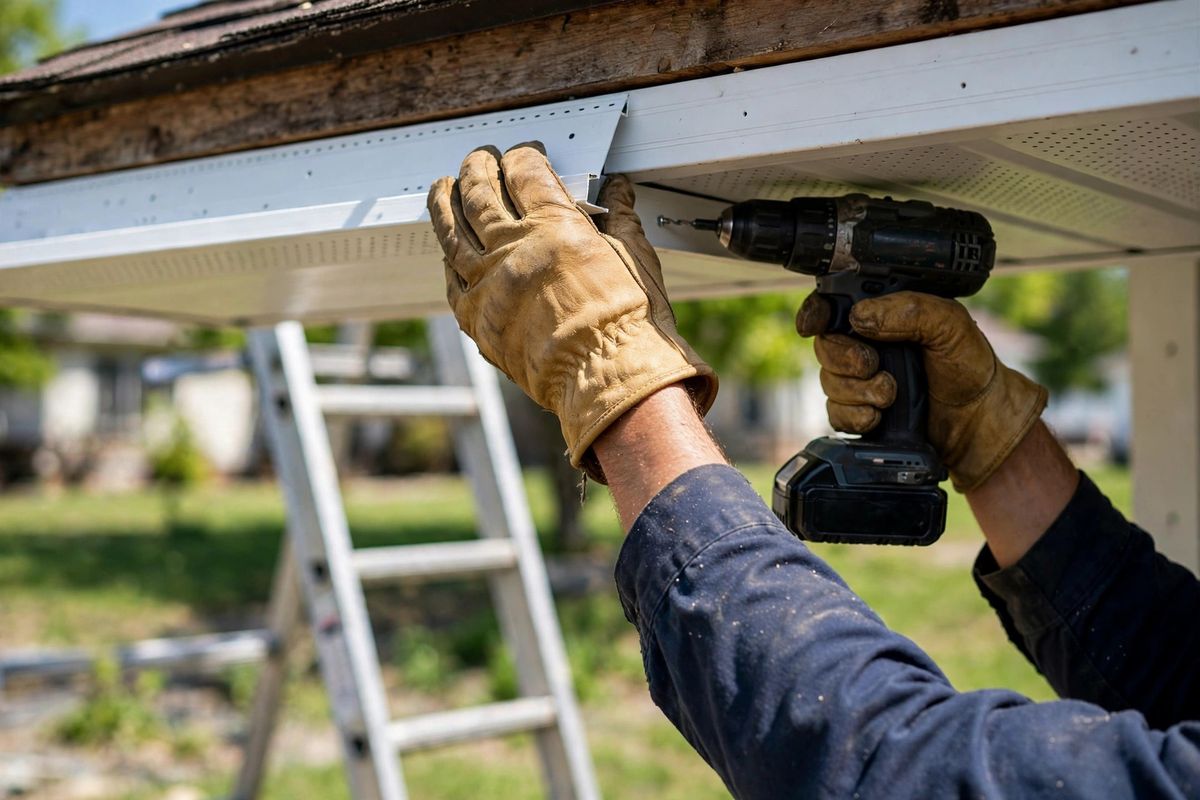
A surprising share of 'siding problems' are actually water problems wearing a disguise. Black streaks below a gutter joint, rot at the base of a wall, algae that returns weeks after washing — each one often traces back to how roof water is collected and discharged. Siding is designed to shed the rain that hits it, not to survive concentrated overflow, constant splash-back or water poured behind it from above. This guide helps you read the stains, find the real cause, and fix the system rather than the symptom.
Vertical streaks directly below a gutter seam or end cap mean that joint leaks every rain. A fan of grime below an overflowing valley means the gutter cannot handle the roof area draining into it. Dark bands at the wall base mean splash-back from hard surfaces or soil piled too high. Algae concentrated under a roof edge with no gutter means the drip line is soaking that wall. Each pattern names its cause if you look before you clean.
Gutters overflow for three reasons: they are clogged, they have lost their slope toward the downspouts, or they are undersized for the roof area and Cincinnati's downpours. Cleaning solves the first; re-hanging or re-sloping addresses the second; larger gutters or added downspouts fix the third. Until overflow stops, any siding beneath it stays wet, paint fails early, and caulk joints are overwhelmed no matter how often they are renewed.
The lowest courses of siding suffer when roof water or hose bibs soak the ground beside the wall, mulch is piled against the siding, or soil has settled so the grade slopes toward the house. The fixes are unglamorous and effective: restore a few inches of clearance between soil and siding, extend downspouts well away from the foundation, and add splash blocks or drainage where discharge lands. Wood and fiber cement bottoms thank you immediately; even vinyl benefits by staying cleaner.
If stains come with soft boards, interior leaks or gutters pulling away from rotted fascia, you have a system problem spanning roofing, gutter and siding trades. A siding provider can assess the wall damage, but insist the water cause is corrected in the same plan. Cincinnati Siding Pros can connect you with local providers for the siding assessment — and advise if a gutter specialist should be your first call instead.
Cincinnati's climate shapes every siding decision on this page. Humid Ohio River valley summers encourage mildew on shaded walls, spring brings the storm season that tests fasteners and flashing, and winter freeze-thaw cycles exploit any gap that admitted water in the fall. Local providers see the results of all three every week, which is why Cincinnati-specific advice matters more than generic national guidance: details that are optional in a dry climate — kick-out flashing, sealed penetrations, correct clearances at grade — are the difference between a wall that lasts and a wall that quietly rots here.
For the core services behind this guide, start with our siding services in Cincinnati overview, compare siding replacement with siding repair, or go straight to siding contractor in Cincinnati, OH on the homepage.
Almost every siding question eventually becomes this one. As a working rule, localized problems — a damaged section, one failing elevation, a single material issue — repair well and economically. Widespread problems — damage or rot on most elevations, recurring leaks at multiple details, materials at the end of their service life — usually make replacement the better spend, because money poured into patching a failing system buys little time. The honest way to decide is with a documented inspection that maps the damage elevation by elevation, prices both paths, and lets the evidence make the argument. Beware any recommendation, in either direction, that arrives before someone has actually looked behind a panel.
Flashing order, trim details and energy gains — why replacing windows during a siding project produces a better, longer-lasting result.
Read the guide →
Wind-lifted panels, flying-debris holes and water intrusion after a storm — what to do in the first 48 hours and the mistakes that make damage worse.
Read the guide →
What actually drives the price of new siding in Cincinnati — materials, home size, tear-off, trim and the questions to ask before you sign.
Read the guide → Cincinnati Siding Pros
Call Cincinnati Siding Pros now and we'll connect you with an independent local siding provider in Cincinnati, OH — no pressure, no obligation. Lines are open 24/7.
 Scan to call now