Fiber Cement Siding: Pros, Cons and Real Maintenance in Ohio
An honest look at fiber cement — where it excels, where it demands more, and what ownership actually looks like across Ohio seasons.
Read the guide →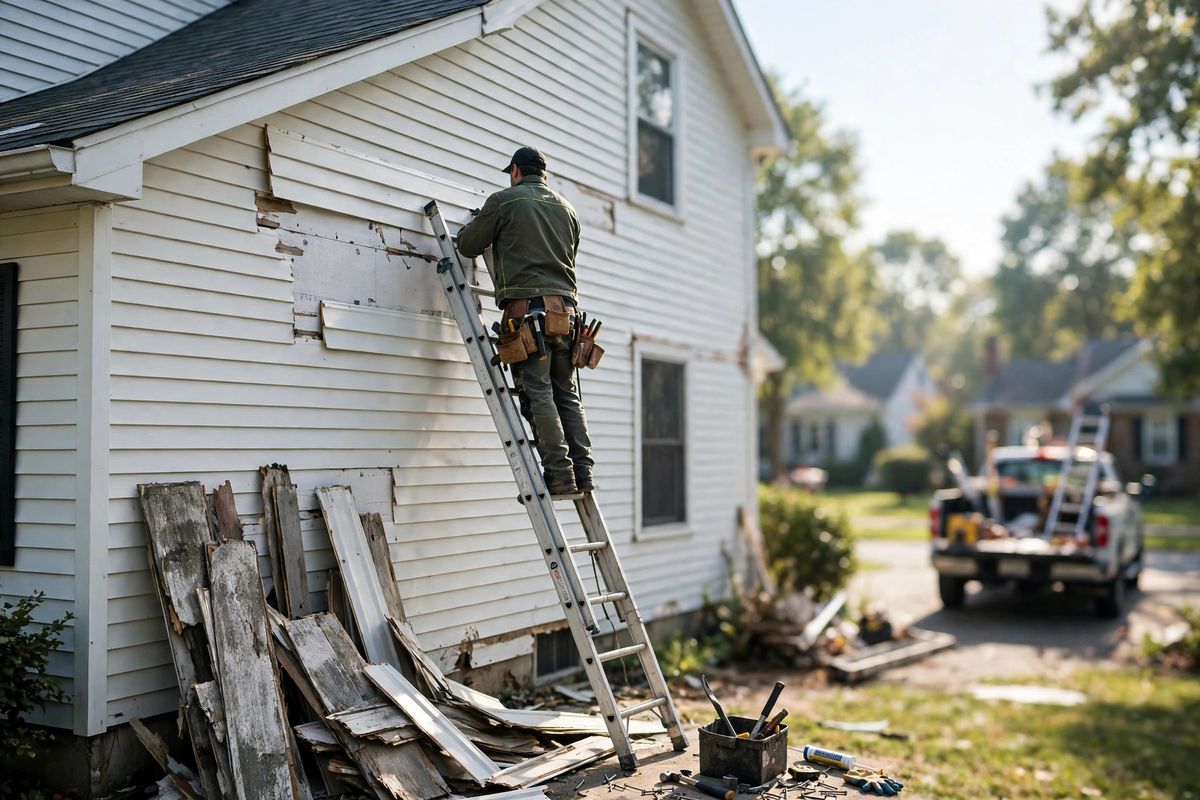
Siding rarely fails all at once. It warns you first — a crack here, a loose panel there, paint that bubbles for no obvious reason. Catching those warnings early is the difference between a focused repair and a wall full of rot. Cincinnati's weather is hard on exteriors: humid summers feed mildew, winter freeze-thaw cycles pry at seams, and storms test every fastener. Here are the seven signs local homeowners should never ignore, and what each one usually means.
Cracked or holed panels are open doors for water and insects. On vinyl, cracks often follow a hard impact or extreme cold; on fiber cement and wood, cracks can signal movement or moisture underneath. A single damaged panel is normally a straightforward replacement — if the profile is still available, the new piece blends in well. The longer a crack stays open, the more likely water is quietly wetting the sheathing behind it.
Warped vinyl usually means heat exposure or nails driven too tight during installation, leaving no room to expand. Loose panels that rattle in wind have often lost their fasteners or locking strip. Both problems let wind-driven rain behind the siding. A provider can re-secure or replace affected sections, but they should also check why it happened so the repair lasts instead of repeating next season.
Soft, crumbly wood siding is rot at work, and it spreads. Dark streaks and mildew point to persistent moisture. On painted siding, bubbles and peeling often mean water is pushing out from behind the boards — painting over it traps the problem. These signs deserve a prompt inspection because the damage is usually worse than what you can see from the yard.
Severe fading is cosmetic, but it also signals a material near the end of its service life and losing its protective qualities. If heating and cooling bills creep up while drafts appear near exterior walls, gaps in the siding system and failed insulation or wrap may be contributing. An inspection can separate a simple repair from the start of a replacement conversation — with evidence, not pressure.
Cincinnati's climate shapes every siding decision on this page. Humid Ohio River valley summers encourage mildew on shaded walls, spring brings the storm season that tests fasteners and flashing, and winter freeze-thaw cycles exploit any gap that admitted water in the fall. Local providers see the results of all three every week, which is why Cincinnati-specific advice matters more than generic national guidance: details that are optional in a dry climate — kick-out flashing, sealed penetrations, correct clearances at grade — are the difference between a wall that lasts and a wall that quietly rots here.
For the core services behind this guide, start with our siding services in Cincinnati overview, compare siding replacement with siding repair, or go straight to siding contractor in Cincinnati, OH on the homepage.
Almost every siding question eventually becomes this one. As a working rule, localized problems — a damaged section, one failing elevation, a single material issue — repair well and economically. Widespread problems — damage or rot on most elevations, recurring leaks at multiple details, materials at the end of their service life — usually make replacement the better spend, because money poured into patching a failing system buys little time. The honest way to decide is with a documented inspection that maps the damage elevation by elevation, prices both paths, and lets the evidence make the argument. Beware any recommendation, in either direction, that arrives before someone has actually looked behind a panel.
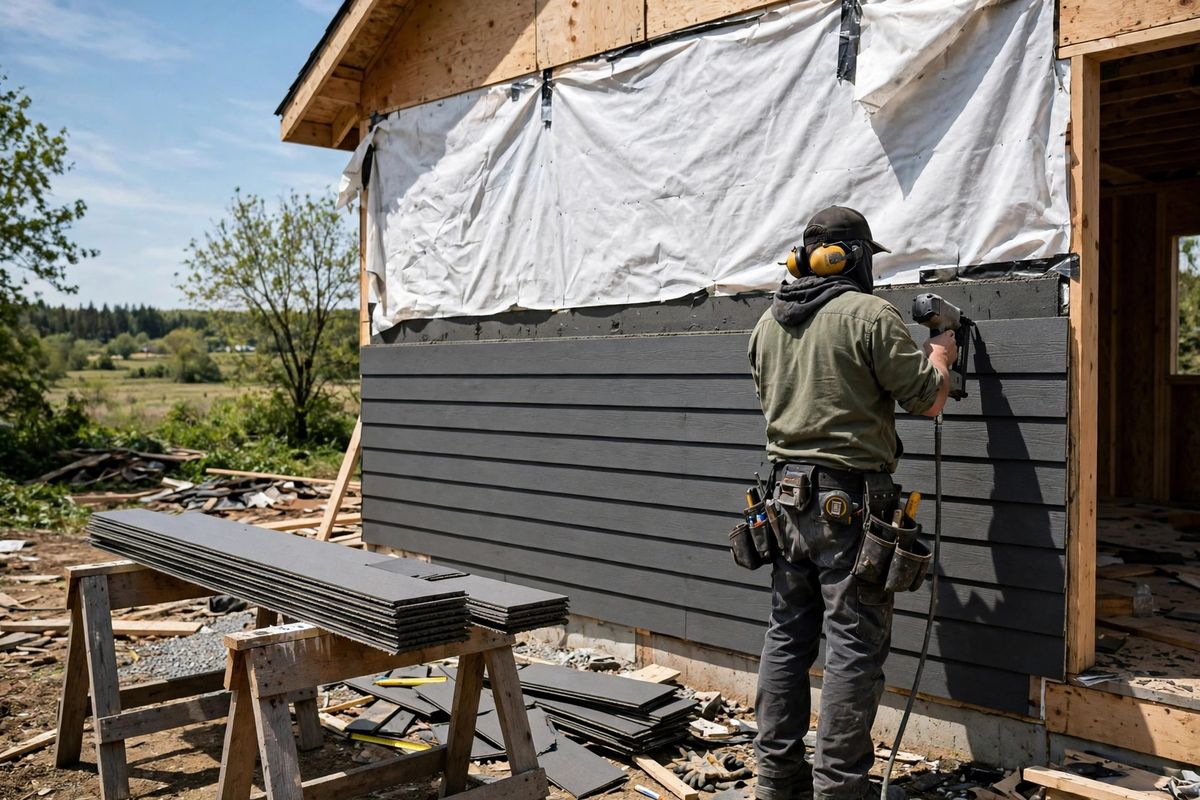
An honest look at fiber cement — where it excels, where it demands more, and what ownership actually looks like across Ohio seasons.
Read the guide →
Who pays, who approves, and which materials and colors pass review — navigating siding work in attached homes and HOA communities in Cincinnati.
Read the guide →
The vertical farmhouse look explained — which materials do it best, where it works on a home, and what drives the cost of the installation.
Read the guide → Cincinnati Siding Pros
Call Cincinnati Siding Pros now and we'll connect you with an independent local siding provider in Cincinnati, OH — no pressure, no obligation. Lines are open 24/7.
 Scan to call now